









What Is Visual Intelligence? Building the Infrastructure of the Visual Economy
Written by Alberto Finadri
When we think about the visual economy we tend to associate it only with those sectors that work through images, such as media, advertising or social platforms. It is estimated that in 2025 alone, more than 1.8 Trillion images were captured by “human users”, with more than 95% of the images that have been acquired through phones and digital cameras. That amounts for over 5 Billion images per day, almost 60.000 every second. At its core, this shift reflects the rise of visual intelligence, where images are no longer passive media but active sources of structured, analyzable data.
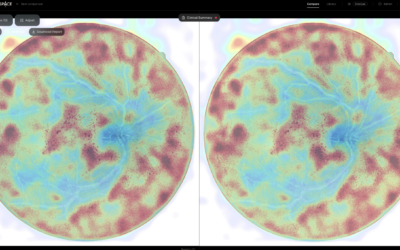
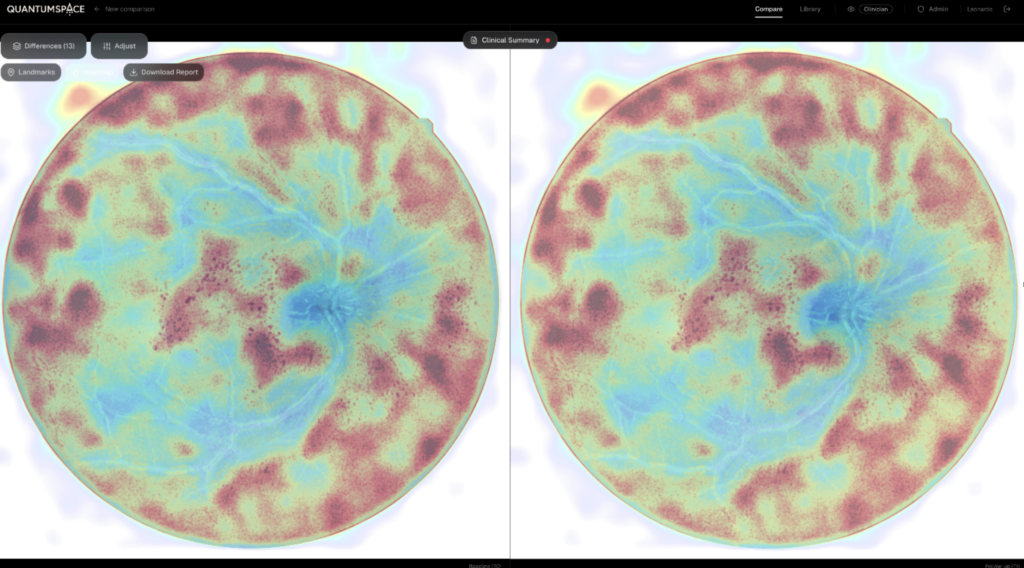
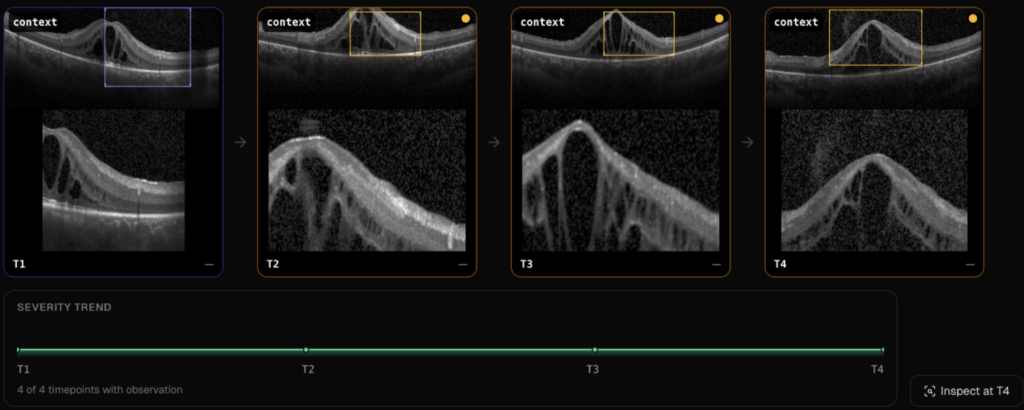
At the perception layer, Iris visual intelligence software converts unstructured images into searchable knowledge through semantic retrieval, anomaly detection, temporal comparison, and explainable visual overlays.
Despite the astronomic figures, this represents only a small portion of the whole market. In reality, the sector of visual data extends far beyond what we traditionally understand as visual content. Visual data encompasses all the information captured and represented through images, from photographs and video streams to 3D reconstructions, industrial inspections, satellite observations, and the countless visual records generated daily by devices and infrastructure. If we extend the base line to include all the visual data captured and processed by machines, the magnitude of the calculation becomes almost intractable, and with our society getting always more digitized the growth rate of the physical world being translated visual representation its increasing year after year.
From this perspective, images are no longer peripheral artifacts of communication, they have become one of the primary interfaces through which reality itself is recorded, stored, and interpreted.
An Unexplored World of Information
Given the scale and rapid expansion of this market, one might reasonably expect a mature economic ecosystem built around visual data, with standardized infrastructures, robust processing capabilities and a dense landscape of companies extracting value from images.
The reality is more complex.
Today, industry research consistently indicates that more than 80–90% of enterprise data remains unstructured. Despite the exponential growth of visual content, only a limited fraction of this information is effectively structured, queried, or integrated into analytical systems. As a result, the informational value embedded within physical objects and visual environments remains largely untapped, leaving businesses and institutions operating above a largely unexplored domain of knowledge.
This is the central paradox of the so-called data economy. We generate unprecedented volumes of visual data, but we lack the structural frameworks required to convert that volume into cumulative intelligence. In other words, we live in an age that celebrates data (“Data is King”), while leaving an entire informational domain structurally unexamined. This gap highlights the growing importance of visual intelligence as a framework for transforming unstructured visual data into meaningful, structured knowledge.

The vision behind QuantumSpace
It is precisely this structural contradiction that defines the vision behind QuantumSpace, which is founded on two fundamental premises.
First, as we’ve just seen, most visual data is not structured and therefore not meaningfully analyzed. The absence of structure prevents extraction, correlation, and cumulative value creation. This results in systemic informational loss across industries.
In 2026, when the quality of information increasingly stands as a strategic alternative to capital itself, leaving such an extensive informational domain structurally unused is no longer economically justifiable.
Second, we see every physical object as an unstructured database. Every tangible element of the physical world contains layers of latent information. Everything is information, but its value emerges only when those informational components are analyzed, correlated, and contextualized within broader datasets. If the problem is systemic informational loss, the response cannot be incremental, but it must begin with rethinking what we consider to be a data source in the first place.
This perspective implies a shift in hierarchy. Rather than treating images as secondary artifacts attached to structured records, we consider visual data as the primary interface through which reality becomes accessible, measurable, and intelligible, both for human cognition and for artificial systems designed to learn from it.
Images as Prime Source of Information
When images are treated as a primary informational layer rather than as a secondary by-product, an almost unexplored domain of knowledge becomes accessible. The ability to identify similarities, recurring patterns, and statistically significant correlations across visual datasets opens a new frontier in digital intelligence. This paradigm drastically contributes to the expansion of the visual computing market itself. The opportunity is not confined to specific industries or predefined applications, but it potentially extends to everything that can be translated into images. In this context, QuantumSpace’s ambition is to build a technological layer for visual intelligence that elevates visual data to a first-order component of digital ecosystems, both public and private.
Nature Has the Perfect Technology
Our approach to artificial intelligence reflects this vision. The objective is not merely automation, but alignment with the way human cognition processes information. The human brain primarily interprets reality visually, assessing the statistical relevance of what it observes against an accumulated database of lived experiences. Meaning emerges through correlation. Attention is allocated based on pattern recognition. Value is assigned once a visual stimulus connects to a framework of analogous situations.
Nature has engineered an extraordinarily powerful processing system. Its limitation is not intelligence, but capacity: memory is finite, perception is selective, and recall is imperfect.
If one could retain and analyze every visual detail across all past experiences, elements that once appeared irrelevant would instantly become critical information. This is the investigative logic applied in forensic analysis: seemingly marginal details acquire decisive significance when correlated within a broader evidentiary structure.
Operationalizing this Principle at Scale
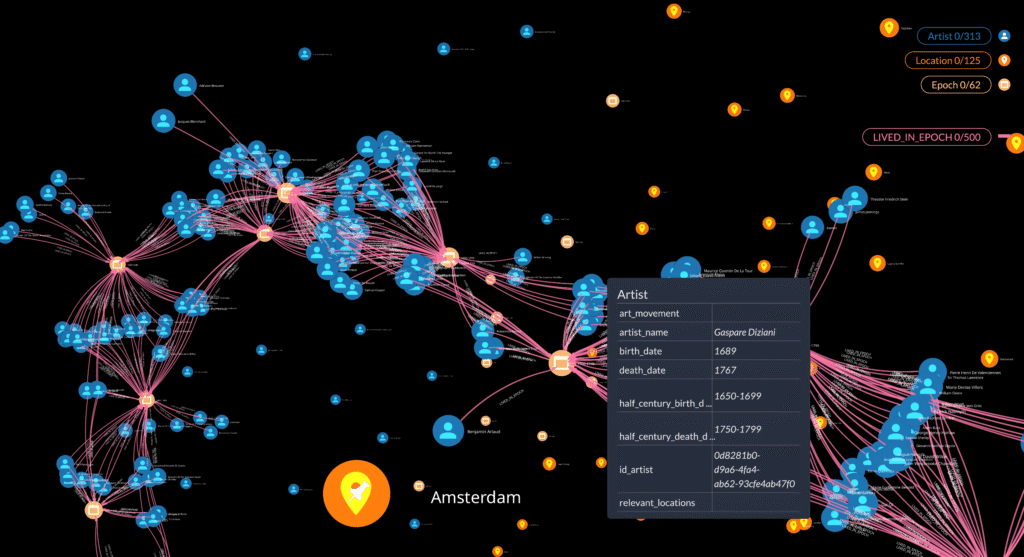
Our technology analyzes, extracts, structures, and archives visual data through advanced computer vision solutions, capturing the maximum informational density contained within visual input. It persistently maps correlations across datasets, transforming isolated images into persistent, interoperable, and cumulative data objects. In this sense, the role of QuantumSpace within digital infrastructures is analogous to that of the microscope in scientific history. The microscope did not create new biological realities, it revealed structures that were previously invisible, enabling humanity to understand macro-level phenomena through micro-level analysis.
Similarly, QuantumSpace enables access to an informational layer that has existed but has not been systematically structured or correlated. By converting visual reality into structured, queryable, and interoperable data, we contribute to the creation of a new informational foundation for artificial intelligence, predictive systems, and cross-sector data interoperability.
The long-term objective is not the optimization of isolated tools or vertical solutions. It is the construction of a horizontal infrastructure dedicated to visual data standardization, persistence, and cumulative intelligence generation. QuantumSpace is oriented toward building foundational technological architecture capable of supporting transversal adoption, long-term scalability, and systemic efficiency across industries.
In a data-driven economy, competitive advantage will increasingly depend not on access to capital alone, but on access to structured, persistent, and interoperable information. QuantumSpace exists to transform visual data from an overlooked digital residue into a foundational layer of economic intelligence.
By enabling structured access to an informational domain that has remained largely unexplored, our technology may ultimately contribute to answering questions we have not yet been able to formulate, revealing patterns, explanations, and insights that only emerge once visual reality is fully structured, correlated, and made computationally intelligible.
References
Gartner Research – Enterprise Information Management and Unstructured Data Estimates (multiple research notes and market analyses).
IDC (International Data Corporation) – Global DataSphere Forecast Reports (latest editions), analyzing global data growth, including the expansion of image and video data.
Seagate & IDC – Data Age 2025: The Digitization of the World – From Edge to Core, White Paper on global data creation and storage trends.
McKinsey Global Institute – The State of AI and The Economic Potential of Generative AI, reports on the economic value derived from unstructured data and AI adoption.
Grand View Research – Computer Vision Market Size & Growth Forecast Reports, outlining projected expansion of visual AI and computer vision markets.
Related Posts:
QuantumSpace Announces Appointment of Sean Sykes as CEO
QuantumSpace officially announces the appointment of Sean Sykes as Chief Executive Officer, accelerating the momentum to deliver breakthrough results for a range of industries, including SHM and Biomedical.
From Subjectivity to Precision: Removing Inconsistency in Medical Evaluations
QLens establishes the foundations for a global medical infrastructure capable of tracking pathogenesis in real time, providing structural support while leaving the clinical interpretation to the physicians.
Fatigue and Performance Diagnosis: The QLens Solution
QLens establishes the foundations for a global medical infrastructure capable of tracking pathogenesis in real time, providing structural support while leaving the clinical interpretation to the physicians.