








Our Solution to Review, Preserve and Enhance Artworks: Muse
Written by Marco D’Aiuto
The future of museums does not rely only on simple digitization pipelines: it relies, and most importantly will rely even more in the future, on the proficiency to turn images into sources of knowledge, and then exploit that knowledge to safeguard, analyze, and enhance artworks through the use of structured and reliable tools.
Starting from this vision on the cultural heritage of archives and collections, a new solution involving our proprietary algorithms and a human based approach to artificial intelligence has been developed here at QuantumSpace: a technology specifically designed for museums and cultural institutions, created and developed with the aim to provide enhanced support to artwork analysis, preservation, and review.
As this tool is a guide and an inspiration to artwork conservation, we decided to call it Muse.
A New Way to Review Artworks
Yet Muse is not a simple tool or a standard application: it is a complete and optimised proprietary system designed to assist museums, curators, restorers and institutions in analyzing and reviewing artworks, in a deeper and more structured fashion. Most importantly, the pipeline always starts from data and materials that are already available or easy to obtain: archival photographs, high resolution images and bibliographical contents.
Within the development of our proprietary technology, Muse has been improved specifically to spot elements invisible to the naked eye, in the likeliness of hidden pigments, subsurface layers, and even specific traces and details that could suggest changes and structural damages throughout time.
Most importantly, this analysis is always performed trough a non invasive, safe, and scalable process.
Both to us and our partners, this means a very simple yet fundamental improvement to the existing State of the Art: every image could be the passkey to a level of knowledge that was almost impossible to reach beforehand, obtained through scientific data analysis and a structured pipeline.
Muse supports curators and institutions in making informed decisions based on structured, coherent data
From Archives to Active Knowledge
One of Muse’s most interesting aspects is, as stated, her capability to enhance materials to which institutions already have access. Thus, existing photo archives that are usually regarded as simple records could become a true hub of structured and scientific knowledge.
With Muse, every artwork can be viewed as a dynamic source of information, giving curators and experts the opportunity to yield reports valuable for cataloguing and supporting authentication, while also monitoring the state of artworks over the years.
Through Muse, data can be questioned in natural speech rather than complex lists of queries.
At the same time, they are incorporated in predictive models that help restorers and curators monitoring efficiently the artwork’s state of preservation.
Our technology thus opens new, astonishing possibilities for the professionals working every day with cultural heritage. For instance, having access to series of continuous, objective, and comparable data enables interventions before visible degradations occur, and helps cutting risks and costs, preventing loss of cultural value.
The layers of data extracted with the support of Muse give new perspectives to Art analysis
Technology Designed to Blend In
We developed Muse to easily fit in preexistent workflows: institutions that have management information systems can plug it in through APIs, while those who do not yet have an advanced digital structure will still find a complete platform, ready for use.
The goal of this approach is clear: we want to make this technology serviceable without useless intricacies, while providing accessible costs and fast activation times.
This process will also continue to involve professionals at any level: Muse is designed to support curators, renovators, and experts, and help them with their tasks, without supplanting them.
Our approach is to complement human knowledge with a tool capable of offering clarity, precision, and analytical consistency. In a field where authenticity, preservation, and authorship are critical issues, being able to count on readable and structured data offers a tangible difference.
For those working on cultural heritages, this means being able to rely on a tool that helps to see more clearly, reach a better understanding, and make decisions with greater awareness.

Through Muse, the museal experience is enhanced with the inclusion of scientific based analysis
Launching from Italy
We decided to start in Italy, a country where a significant portion of artistic heritage has not yet been digitized in a well-organized manner. For us, this represents both a challenge and an opportunity.
Our ambition is to democratize access to deep knowledge of artworks, spreading it beyond a small circle of experts, while making it available to a greater number of museums and cultural institutions.
In this first phase, a network of partnered museums will accompany us through Muse’s introduction, contributing to defining new standards of analysis and preservation. We firmly believe that from here a broader change may start, bound to reach international levels.
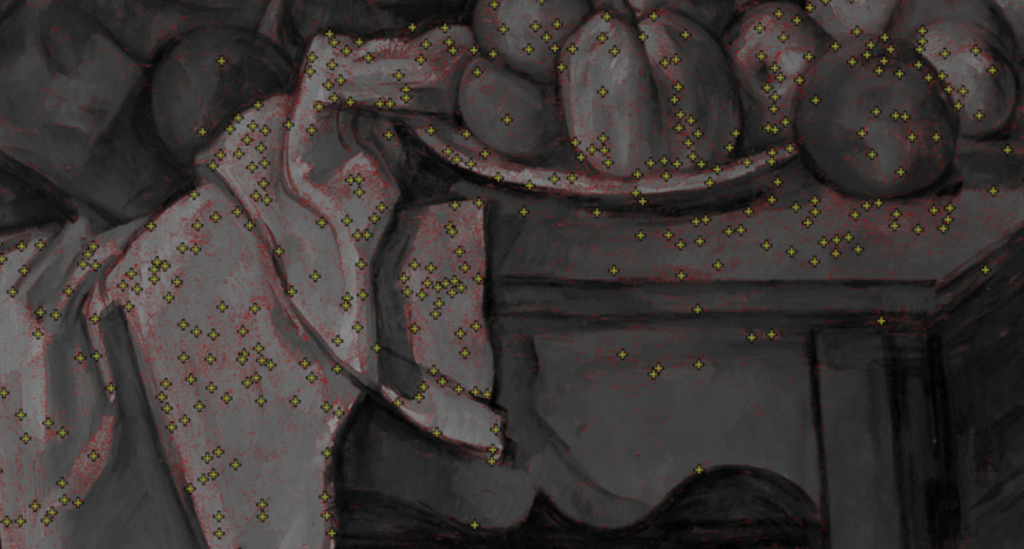
Muse emerges as a practical tool that transforms the core of artwork preservation with technical analysis
Looking Ahead
Muse’s impact does not only affect institutions’ internal work: it also changes the way people can experience art.
When our software reveals new artwork layers, changes, and details, it allows us to experience a knowledge that normally would be partially invisible, overlooked and often not properly analized.
Thus, with our analysis, each visit to a museum or a collection is enriched, more informed, and more immersive. Art is not only something to behold, but something to explore and understand.
To us, this is one of the project’s most important aspects: making the artwork’s knowledge more accurate, and also more accessible and engaging.
With Muse, QuantumSpace takes a major step towards its goal: protect, comprehend, and enhance artistic legacy with the support of human supervised artificial intelligence.
We believe Art is not only History, it is also an alive system, made of materials, changes, contexts, and connections. Today, thanks to technology, we can start interpreting it under a new light.
Muse’s idea stems exactly from this concept: the future of preservation relies on the capability to see everything, including what was previously hidden.
Related Posts:
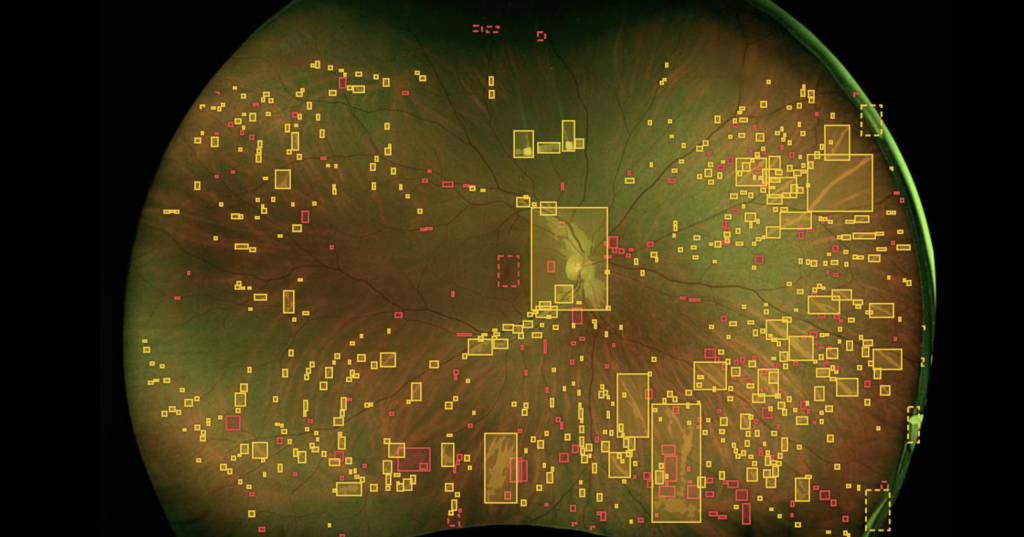
QLens Meets the Market: Our Healthcare Technology for Clinicians
The announcement of QuantumSpace's participation in the most prominent Biomedical events in the US. Confronting with clinicians and investors, our CEO and COO showcase the full potential of our technology.
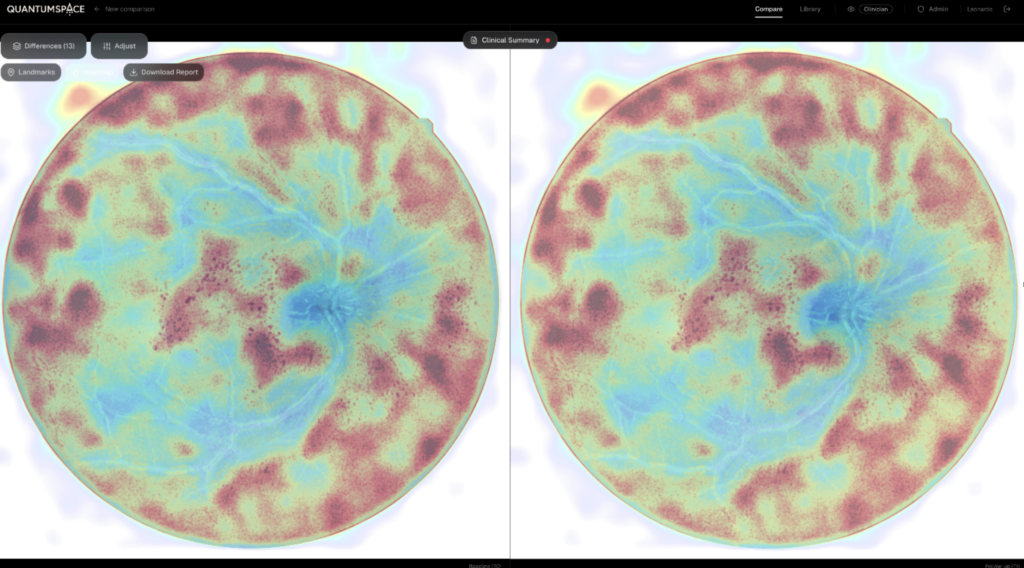
How AI Reduces Inconsistencies in Medical Image Analysis
QLens establishes the foundations for a global medical infrastructure capable of tracking pathogenesis in real time, providing structural support while leaving the clinical interpretation to the physicians.
Fatigue and Performance Diagnosis: The QLens Solution
QLens establishes the foundations for a global medical infrastructure capable of tracking pathogenesis in real time, providing structural support while leaving the clinical interpretation to the physicians.